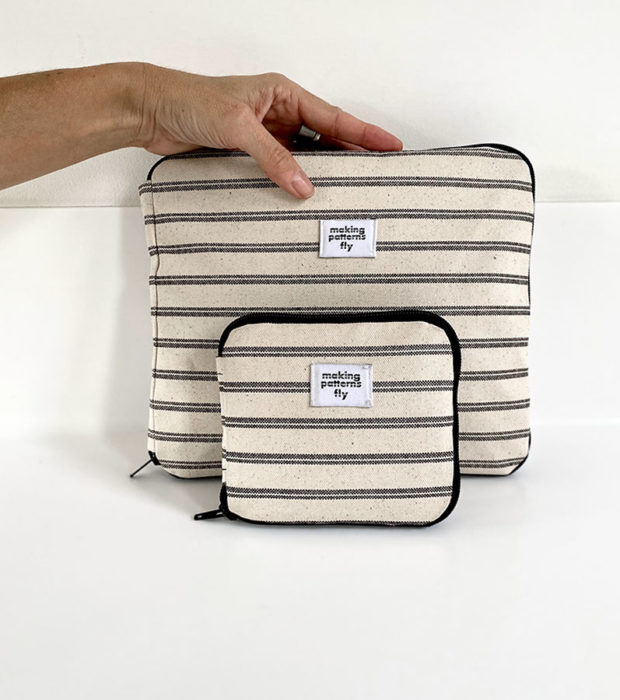
Let me tell you more about the Piccadilly wallet
This coin purse can be sewn in two different ways, depending on the type of outer fabric you choose. If you're using a stiff or thicker fabric (such as canvas, faux leather, felt, or similar), I recommend going for the bias-bound finish.This method allows finish the edges without turning the piece inside out, making the sewing process easier and giving it a professional look. You can also use the same fabric for the lining,creating a cohesive design. Here's the link to learn how to sew bias tape on a corner.
If you choose lighter or more flexible fabric , you can sew the coin purse using the traditional method: placing right sides together, turning the piece right side out out after sewing, and closing the edges from the inside. This method is ideal if you're aiming for a softer finish and a more casual look.
For both methods, you can add interfacing to the outer or inner fabric if you want to give the coin purse more structure, stability, or firmness . This is especially helpful when working with very lightweight fabrics.
Both options are explained step by step in the pattern instructions, so you can choose the technique that best suits your fabric type and the finish you’re looking for. y para acompañar las instrucciones tiene el tutorial de la versión sin bies. Aquí te lo dejo.
What will you need to sew this pattern?
- Download documents. (see more).
- 12 inches of fabric and 12 inches of lining for the outer part and the inner coin purse.
- Interfacing (optional)
- 6.7" zipper
- 0.6 inches of cord
- 4.7 inches of 1.2-inch wide ribbon
- Common sewing materials: (tape measure, tape, paper and fabric scissors, pins, thread...).